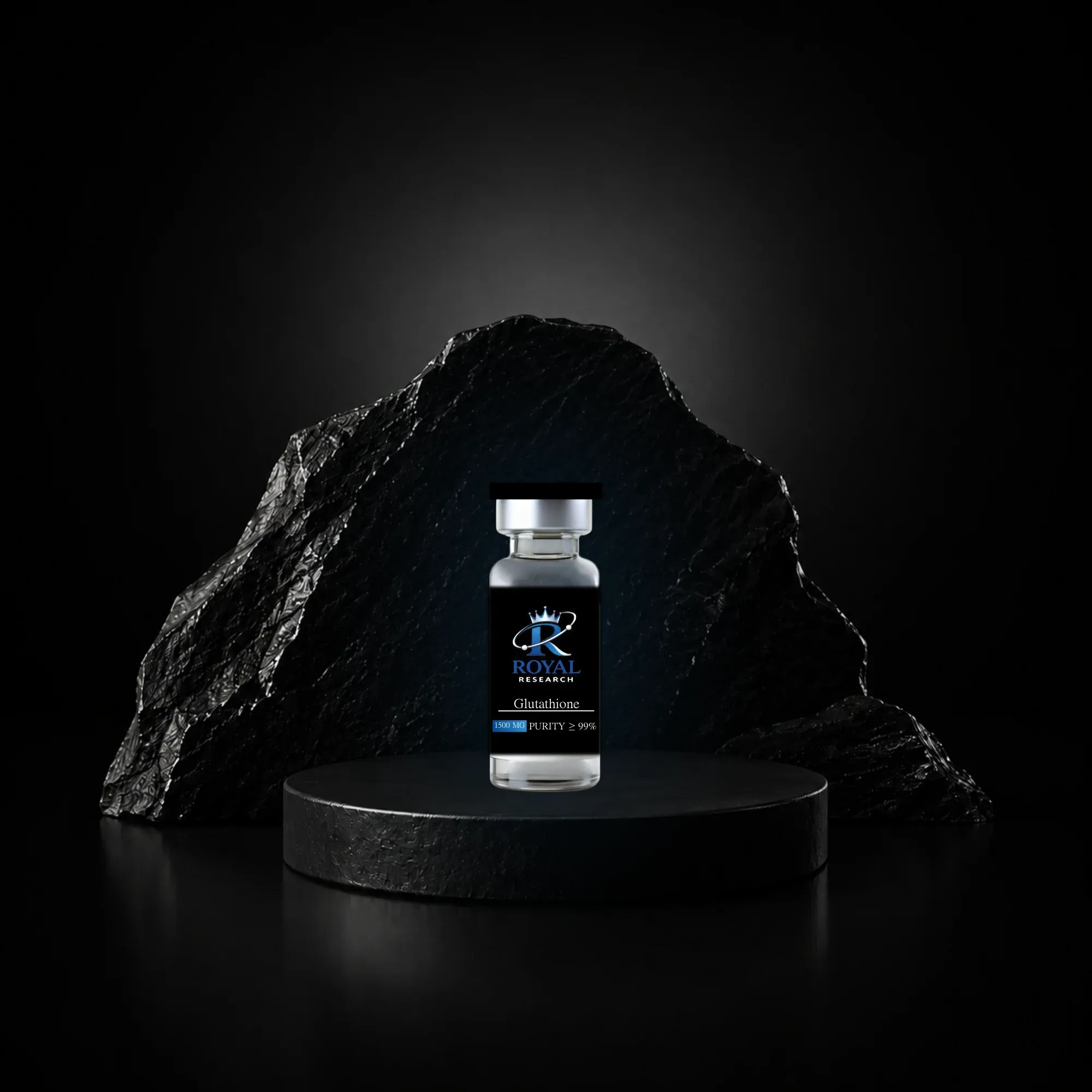
Glutathione
Synonym: L-Glutathione, Reduced Glutathione (GSH)
CAS Number: 70-18-8
Molecular Formula: C₁₀H₁₇N₃O₆S
Molecular Weight: 307.32 g/mol
Structure: Endogenous tripeptide composed of glutamic acid, cysteine, and glycine
Overview
Glutathione (GSH) is a naturally occurring tripeptide found throughout mammalian cells and is considered one of the body’s primary intracellular antioxidants. It plays a central role in maintaining cellular redox balance, supporting detoxification pathways, and protecting biological structures from oxidative stress.
Due to its involvement in numerous biochemical processes, glutathione is widely studied in research related to cellular defense systems, mitochondrial function, oxidative stress regulation, and metabolic homeostasis.
Mechanism of Action
Glutathione functions as a critical regulator of intracellular redox status through several mechanisms:
- Antioxidant Activity
- Neutralizes reactive oxygen species (ROS)
- Protects proteins, lipids, and nucleic acids from oxidative damage
- Redox Regulation
- Maintains cellular oxidation-reduction balance
- Cycles between reduced (GSH) and oxidized (GSSG) forms
- Detoxification Pathways
- Serves as a substrate for glutathione-dependent enzymes
- Facilitates conjugation and elimination of reactive compounds
- Mitochondrial Support
- Contributes to mitochondrial antioxidant defense systems
- Supports maintenance of cellular energy production environments
Its broad biological activity makes glutathione one of the most extensively studied endogenous molecules in cellular biology.
Pharmacokinetic Characteristics
- Naturally synthesized within mammalian tissues
- Present in high concentrations intracellularly
- Continuously recycled through glutathione reductase pathways
- Metabolized through normal amino acid and redox processes
Structural Characteristics
Glutathione is composed of:
- Glutamic Acid
- Cysteine
- Glycine
Key features include:
- Sulfhydryl (-SH) group responsible for antioxidant activity
- Naturally occurring intracellular peptide
- Essential component of cellular antioxidant systems
- Conserved across a wide range of biological organisms
Research Applications
Glutathione is commonly studied in research involving:
- Oxidative stress biology
- Cellular antioxidant systems
- Mitochondrial function
- Detoxification pathways
- Redox signaling
- Cellular metabolism and homeostasis
It remains a foundational research tool for investigations into cellular protection and metabolic regulation.
Handling & Stability
- Typically supplied as a lyophilized powder
- Requires reconstitution with a suitable sterile solvent prior to use
- Store at -20°C or below for long-term stability
- Protect from excessive heat, moisture, and prolonged light exposure
- Avoid repeated freeze-thaw cycles
Note
This material is intended for laboratory research use only and is not approved for human or veterinary applications.
Every batch undergoes independent third-party analytical testing for purity, identity, and consistency. Relevant documentation is maintained to support verification and traceability.
Yes. Analytical documentation is maintained for supported products and batches. Verification resources are available to help researchers review relevant testing information.
Each production batch is assigned documentation that links materials to associated testing records and verification resources, helping maintain consistency and transparency.