$119.99
Third-Party Test Results Available
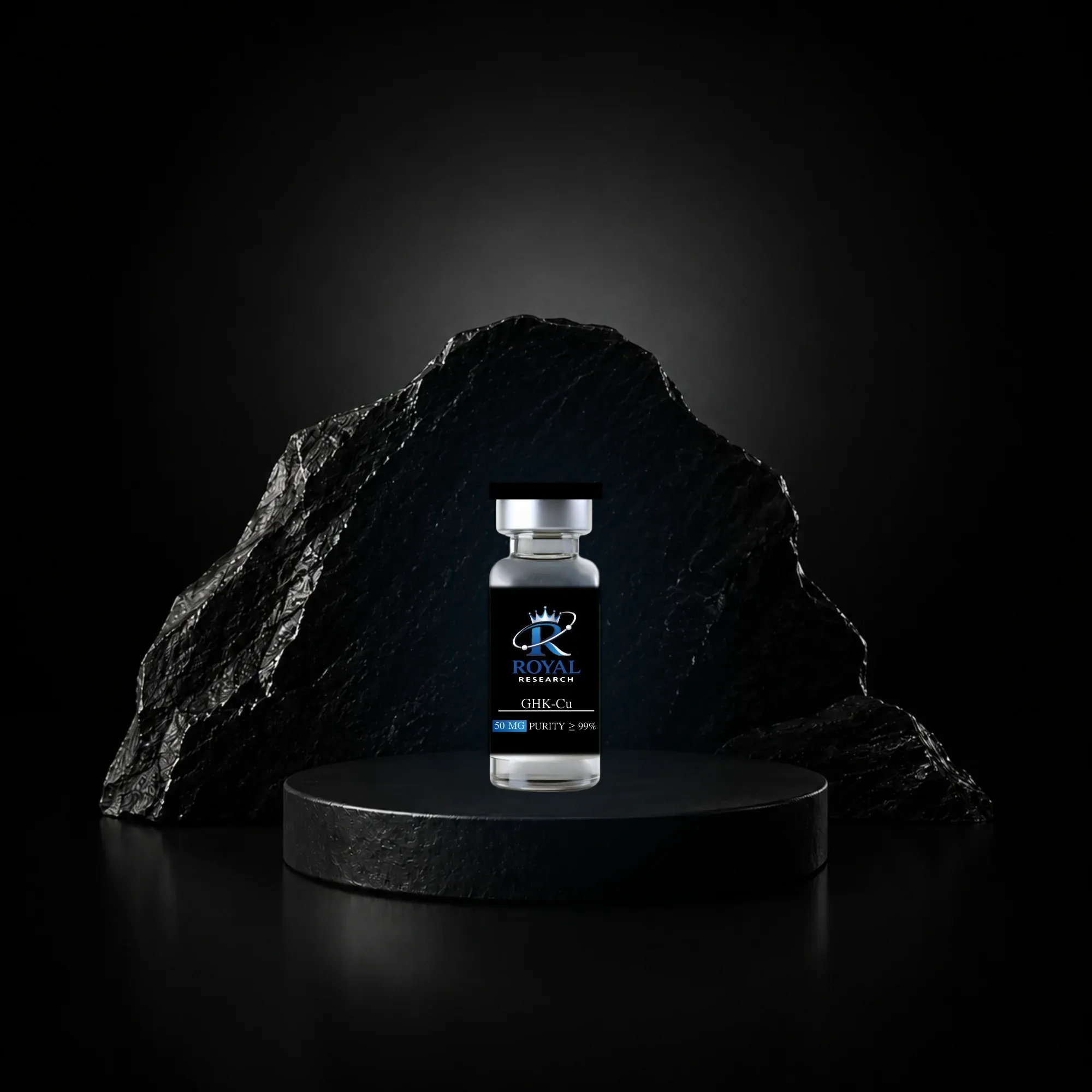
GHK-Cu is a copper-coordinated tripeptide formed from glycyl-L-histidyl-L-lysine (GHK). Supplied exclusively as a laboratory research material.
46 in stock
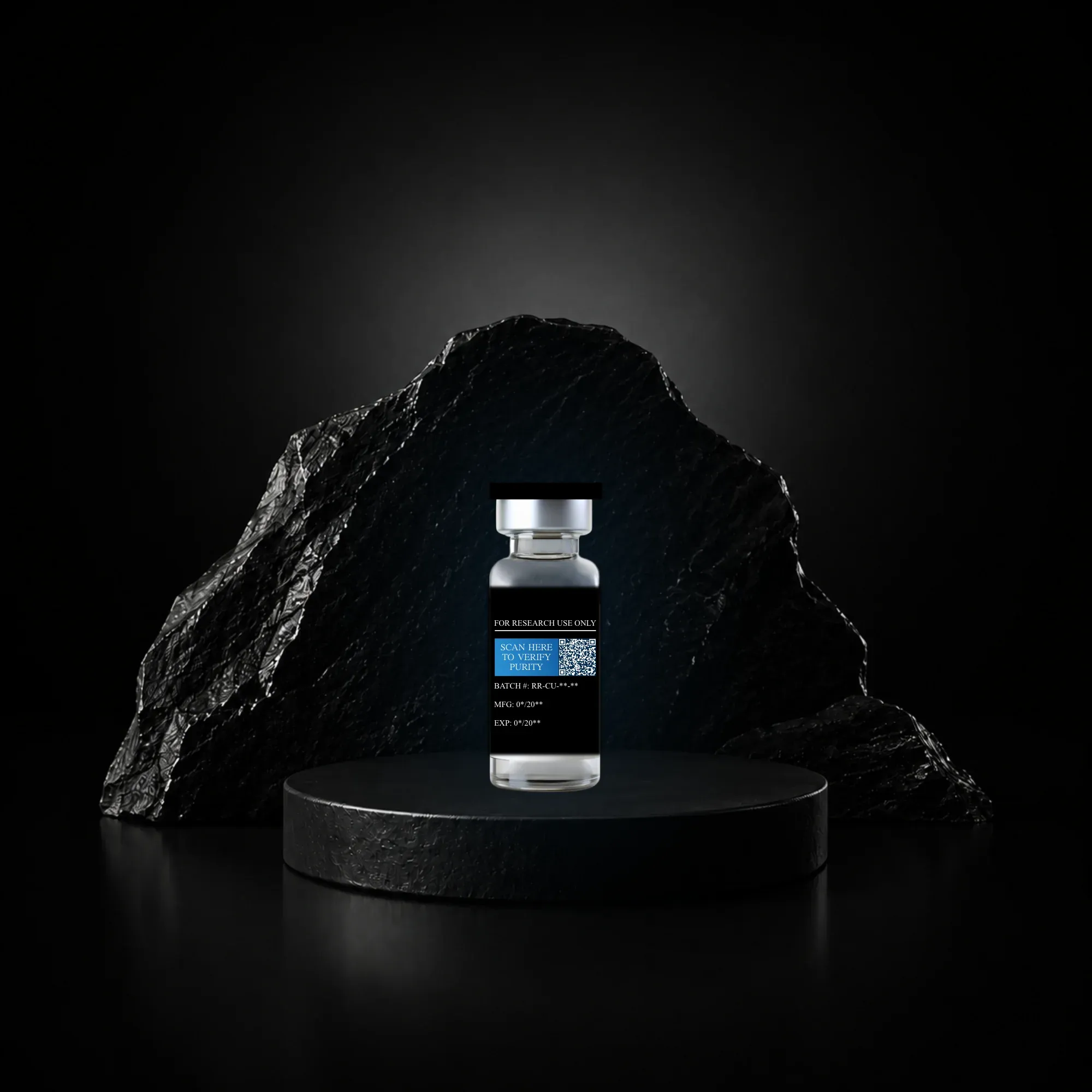
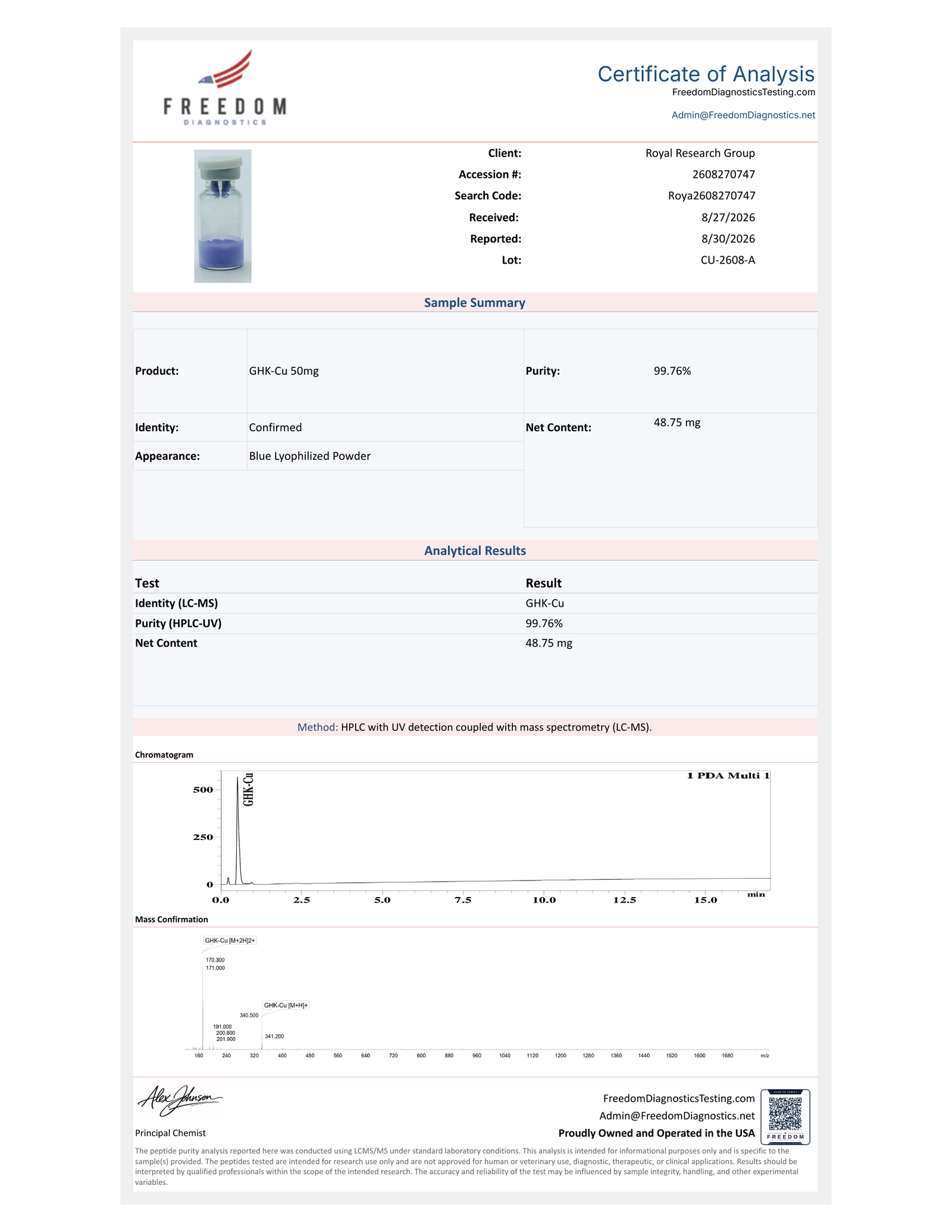
Each batch is independently tested by a third-party laboratory.
Test results are linked to the corresponding product and batch.
Scan the product QR code to access its batch-specific test results.
Compound: GHK-Cu
Research Identifier: Copper Tripeptide-1
CAS Number: 49557-75-7
Purity: See batch-specific Certificate of Analysis
Supplied as lyophilized powder.
Store lyophilized material refrigerated at 2°C to 8°C, protected from light and moisture. For longer-term storage, keep frozen at -20°C or below. Refer to applicable product and batch documentation for any product-specific storage requirements.
Batch-specific Certificate of Analysis (COA) documentation is available directly in the product image gallery. Additional laboratory verification records may be accessed through the corresponding laboratory database where available.
For Research Use Only. Not for human consumption. Supplied exclusively for laboratory research and analytical purposes.
Orders are typically processed within one business day. Processing times may vary during periods of increased order volume.
Available shipping methods and applicable rates are displayed during checkout based on the destination and order.
Tracking information is provided after an order has been processed and dispatched.
For complete information regarding processing, delivery, and shipping requirements, please review our Shipping Policy.
If you need to modify or cancel an order, contact support as soon as possible. Requests are reviewed based on the current status of the order and cannot be guaranteed once processing has begun.
If an order arrives damaged or contains an incorrect item, contact support promptly with your order information and relevant photos so the issue can be reviewed.
Return and refund eligibility is determined according to our Refund & Return Policy. Please review the policy for applicable requirements, exclusions, and instructions before submitting a request.
Questions regarding an existing order can be submitted through our Contact page.
Explore additional materials from the Royal Research Group catalog.
Have a question about a product, documentation, testing, or an order? Our team is available to assist.
 |
 |
 |