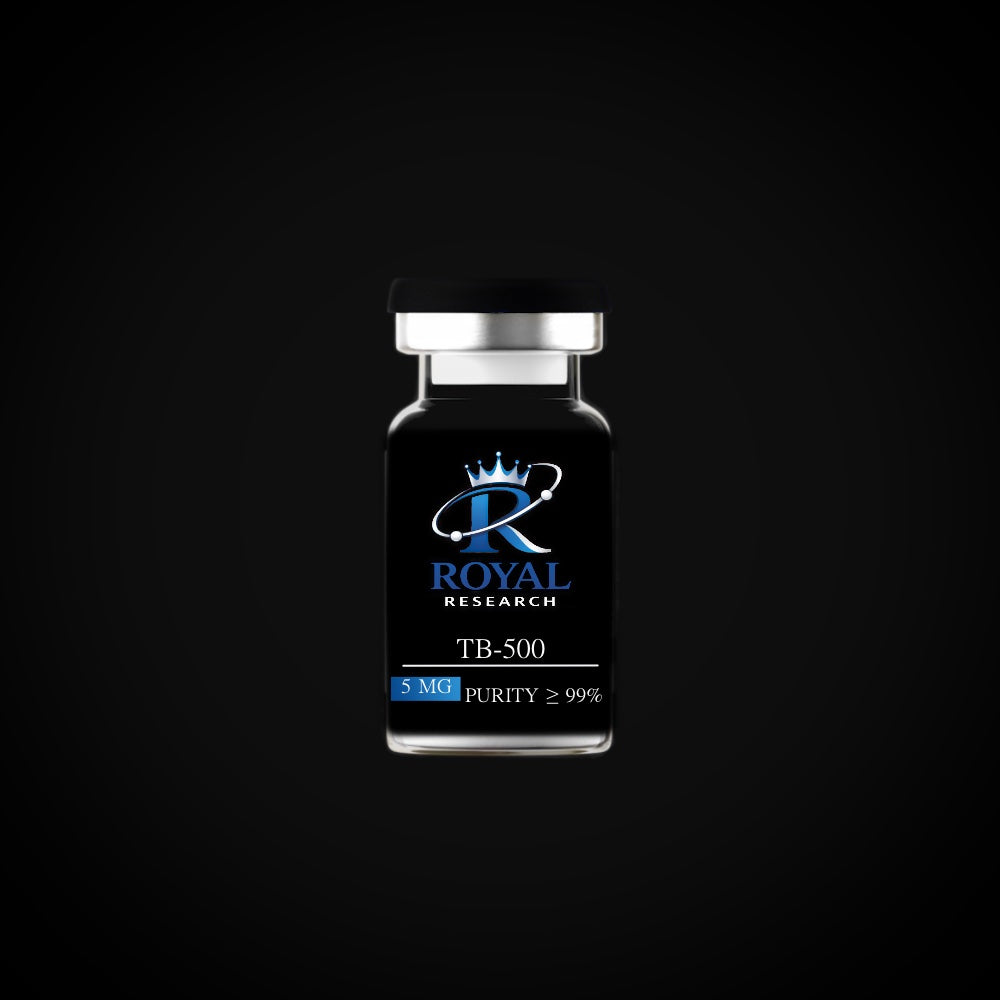
Royal Research
TB-500 5mg
TB-500 5mg
Couldn't load pickup availability
TB-500
Synonym: Thymosin Beta-4 (Fragment/Analog)
CAS Number: N/A (varies by form/fragment)
Molecular Formula: Varies (commonly associated with Thymosin Beta-4: C₂₁₂H₃₅₀N₅₆O₇₈S)
Molecular Weight: ~4963.4 g/mol (full-length reference)
Structure: Synthetic peptide corresponding to, or derived from, Thymosin Beta-4, a naturally occurring actin-binding peptide
Overview
TB-500 is a synthetic peptide representing either the full-length Thymosin Beta-4 (43 amino acids) or functional fragments designed to replicate its biological activity. Thymosin Beta-4 is an endogenous peptide widely distributed in mammalian tissues and is involved in cell migration, angiogenesis, and cytoskeletal organization.
TB-500 is utilized in research to study processes related to actin regulation, tissue remodeling, and cellular signaling pathways associated with repair mechanisms.
Mechanism of Action
TB-500 primarily exerts its effects through interaction with actin dynamics and cellular migration pathways:
-
Actin Sequestration
-
Binds to G-actin (globular actin)
-
Regulates actin polymerization and cytoskeletal organization
-
-
Cell Migration & Differentiation
-
Facilitates cell motility, including endothelial and epithelial cells
-
Supports processes involved in tissue remodeling
-
-
Angiogenic Signaling
-
Associated with increased vascular endothelial growth factor (VEGF) expression
-
Promotes formation of new vascular structures in experimental models
-
-
Anti-Inflammatory Signaling
-
Modulates cytokine activity and inflammatory response pathways
-
Influences cellular response to injury-related signaling
-
The peptide’s activity is largely non-receptor specific, functioning through intracellular and extracellular signaling modulation.
Pharmacokinetic Characteristics
-
Rapid distribution across tissues in experimental models
-
Activity influenced by interaction with intracellular actin pools
-
Short intrinsic half-life for native forms; synthetic variants may differ
-
Cleared via standard proteolytic degradation pathways
Structural Characteristics
TB-500 corresponds to Thymosin Beta-4, a 43-amino acid peptide, or its active regions:
-
Contains actin-binding domains critical for function
-
Highly conserved sequence across species
-
Does not require lipidation for biological activity
-
Functional fragments are designed to retain core bioactive regions
Research Applications
TB-500 is studied in experimental settings involving:
-
Cytoskeletal dynamics and actin regulation
-
Cell migration and differentiation
-
Angiogenesis and vascular development
-
Inflammatory response modulation
-
Tissue remodeling and repair-related signaling
It is commonly utilized in research examining cellular movement and structural protein interactions.
Handling & Stability
-
Typically supplied as a lyophilized powder
-
Requires reconstitution with a sterile solvent prior to use
-
Store at low temperatures (commonly -20°C or below) for long-term stability
-
Avoid repeated freeze-thaw cycles
-
Stability may vary depending on whether full-length or fragment form is used
Note
This material is intended for laboratory research use only and is not approved for human or veterinary applications.
Share